
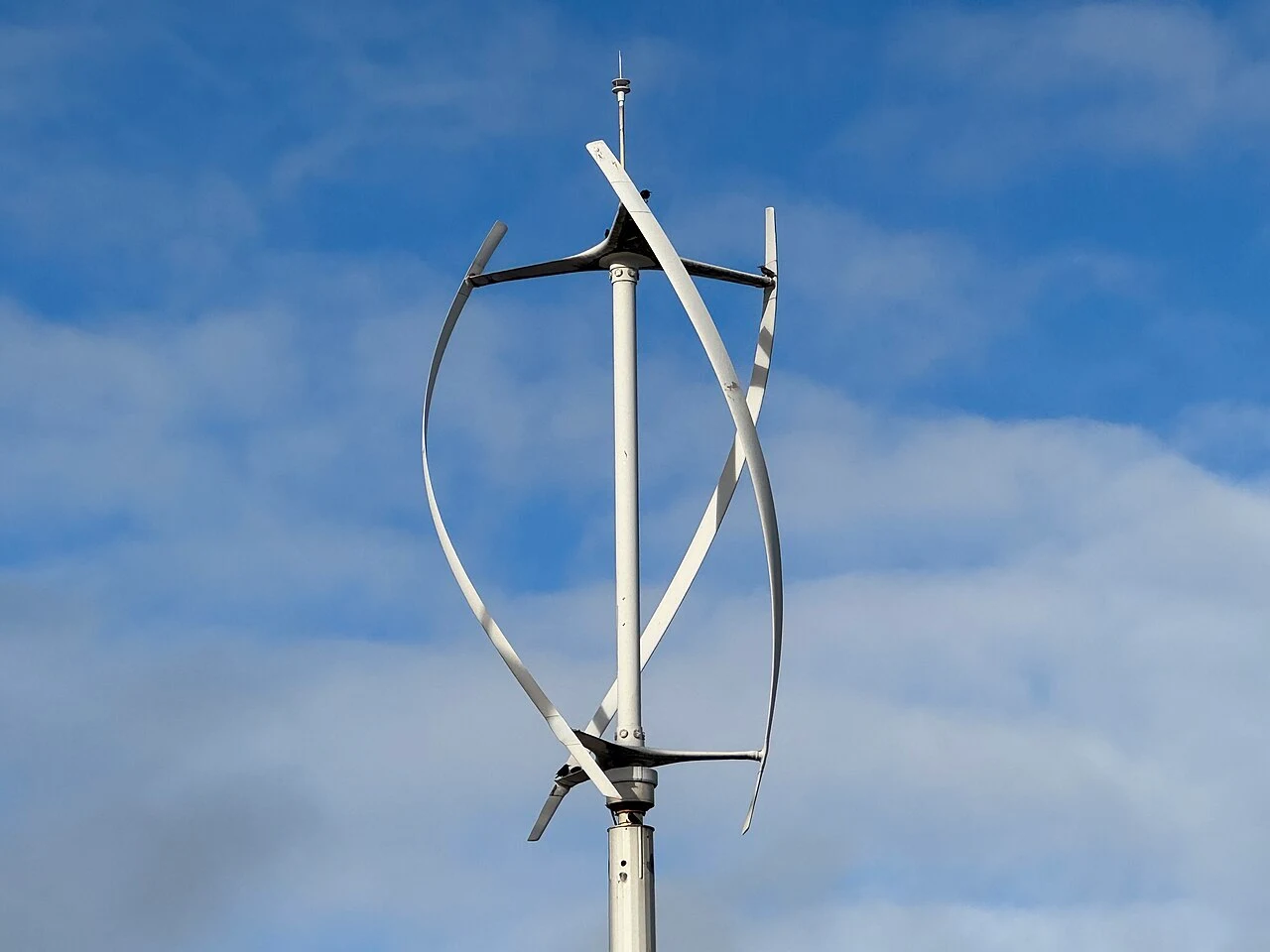
Monitoring task and sensing route
Sensor placement should account for tower orientation, with temperature references for the slow-changing background. Frequency analysis also needs rotational-speed records and stable operating intervals.
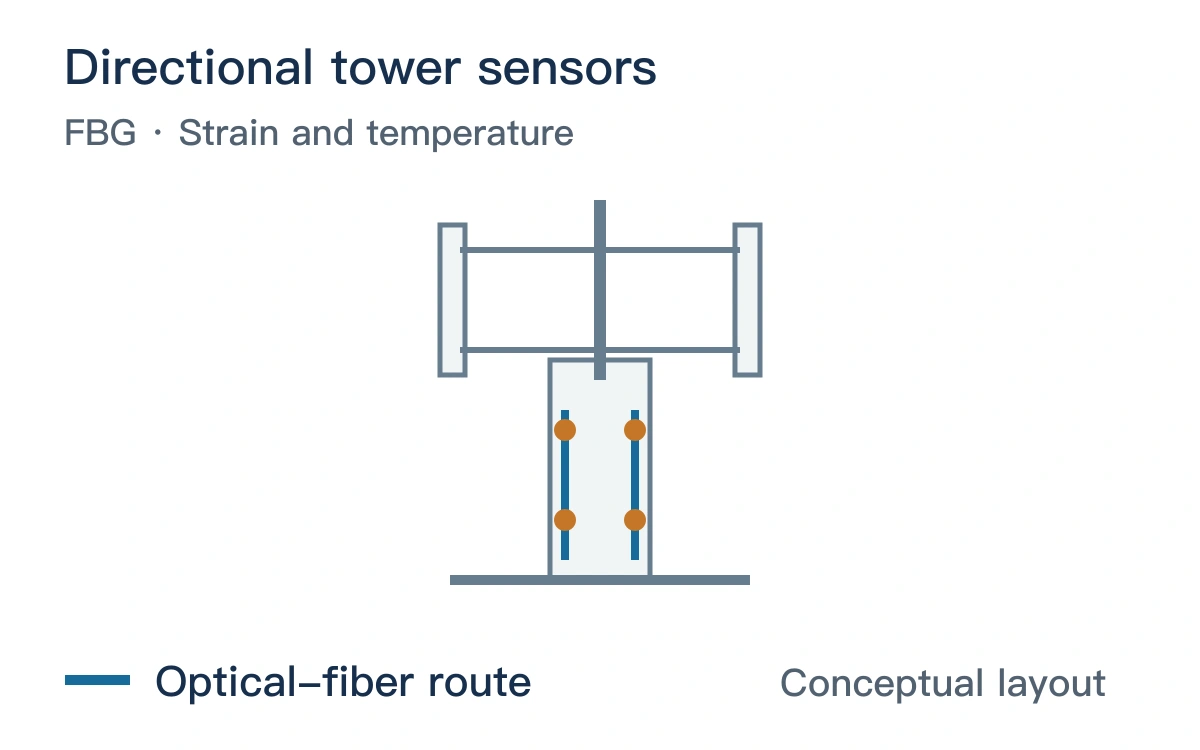
Published research observation
Van Esbeen and colleagues installed strain and temperature FBGs on a vertical-axis wind turbine, using frequency analysis to separate rotational and structural-mode responses. [1]
| Item | Description |
|---|---|
| Study setting | Field tests on a vertical-axis turbine |
| Research observation | Bending responses from different frequency sources |
| Proposed comparison | Record orientation, height, packaging and temperature references. |
Validation and integration priorities
Synchronize speed, wind and operating state; distinguish steady operation from speed changes.
Check major frequencies with independent vibration measurements and inspect bonding during long-term comparisons.
Reference
[1] Van Esbeen B et al. Strain Monitoring of Vertical Axis Wind Turbine Tower Using Fiber Bragg Gratings. Sensors (Basel, Switzerland) (2025). DOI: 10.3390/s25133921.