
Monitoring task and sensing route
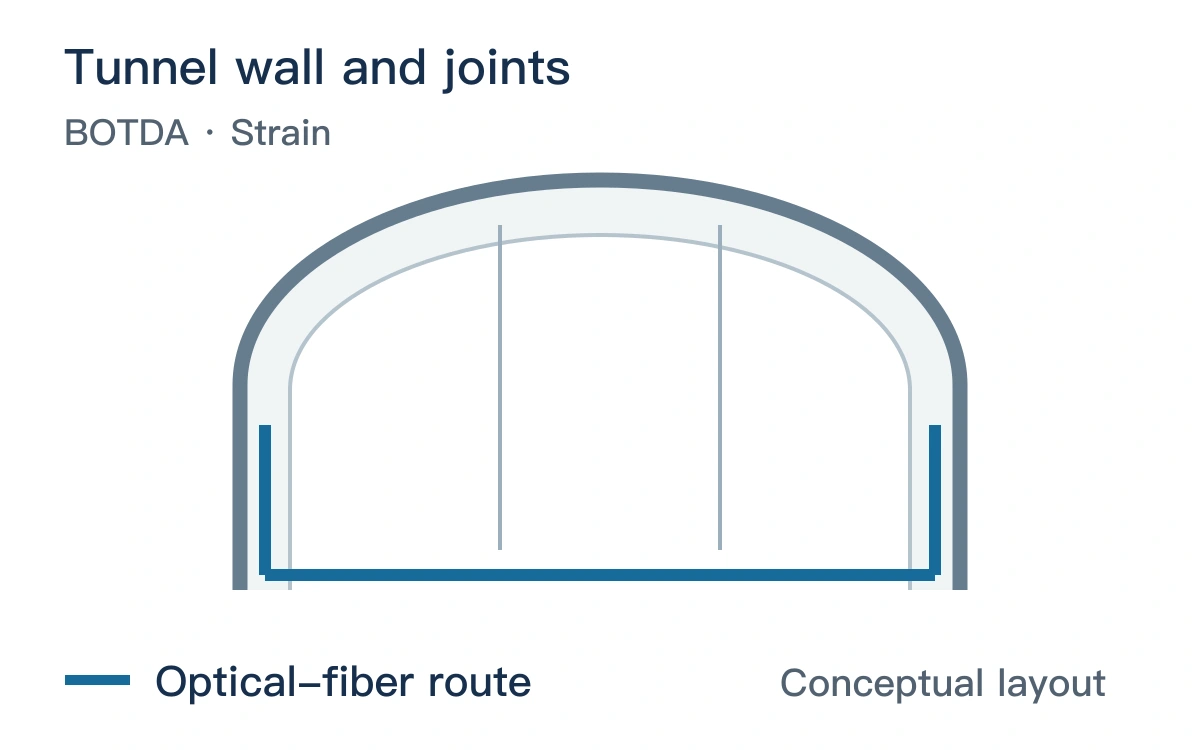
Bonded fiber records strain transferred from local opening and closure. Interpretation depends on joint locations, adhesion, temperature and the chosen reference period.
Published research observation
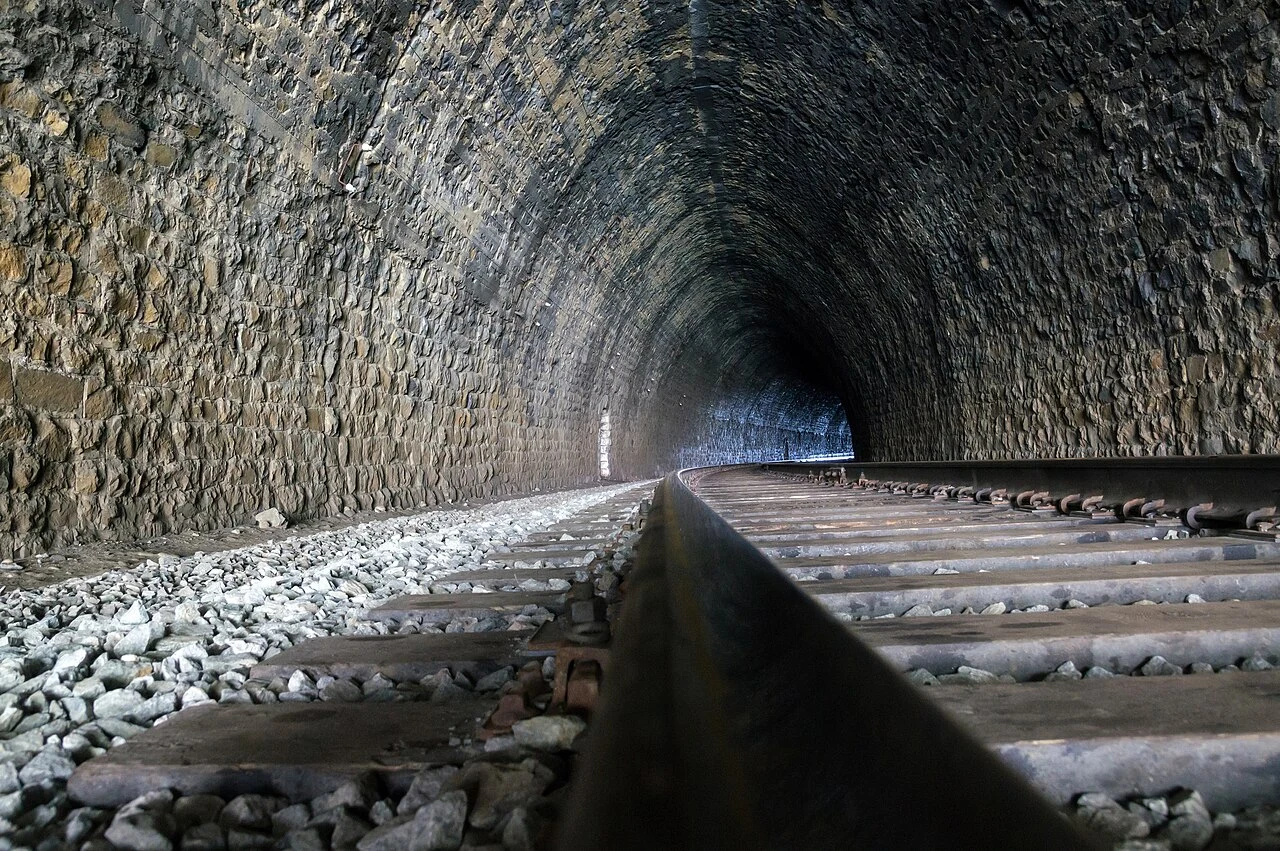
Minardo and colleagues monitored a railway tunnel crossing an active landslide using Brillouin strain sensing, comparing joint-related changes with other deformation observations. [1]
| Item | Description |
|---|---|
| Study setting | Long-term railway-tunnel field monitoring |
| Research observation | Time-dependent strain near structural joints |
| Proposed comparison | Identify structural sections, joints and bonded lengths; log maintenance and rebonding. |
Validation and integration priorities
Compare inclinometer, joint-displacement and temperature records using matched reference periods.
Retain raw trends and inspection findings when changes occur; follow project-specific response procedures.
Reference
[1] Minardo A et al. Long-Term Monitoring of a Tunnel in a Landslide Prone Area by Brillouin-Based Distributed Optical Fiber Sensors. Sensors (Basel, Switzerland) (2021). DOI: 10.3390/s21217032.