
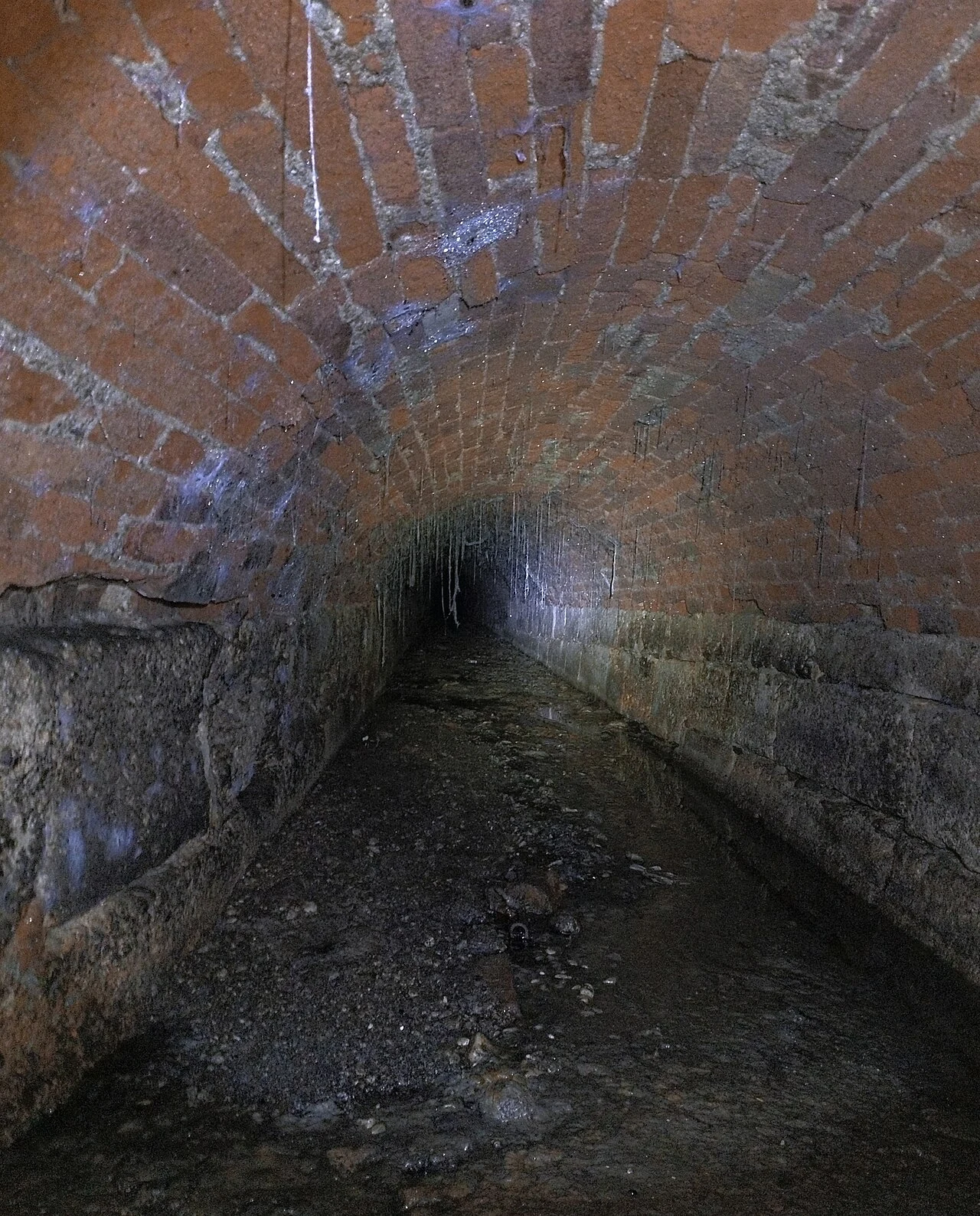
Monitoring task and sensing route
Temperature contrasts between incoming water and sewage produce local anomalies. Interpret these alongside precipitation, snow cover and network geometry before field review.
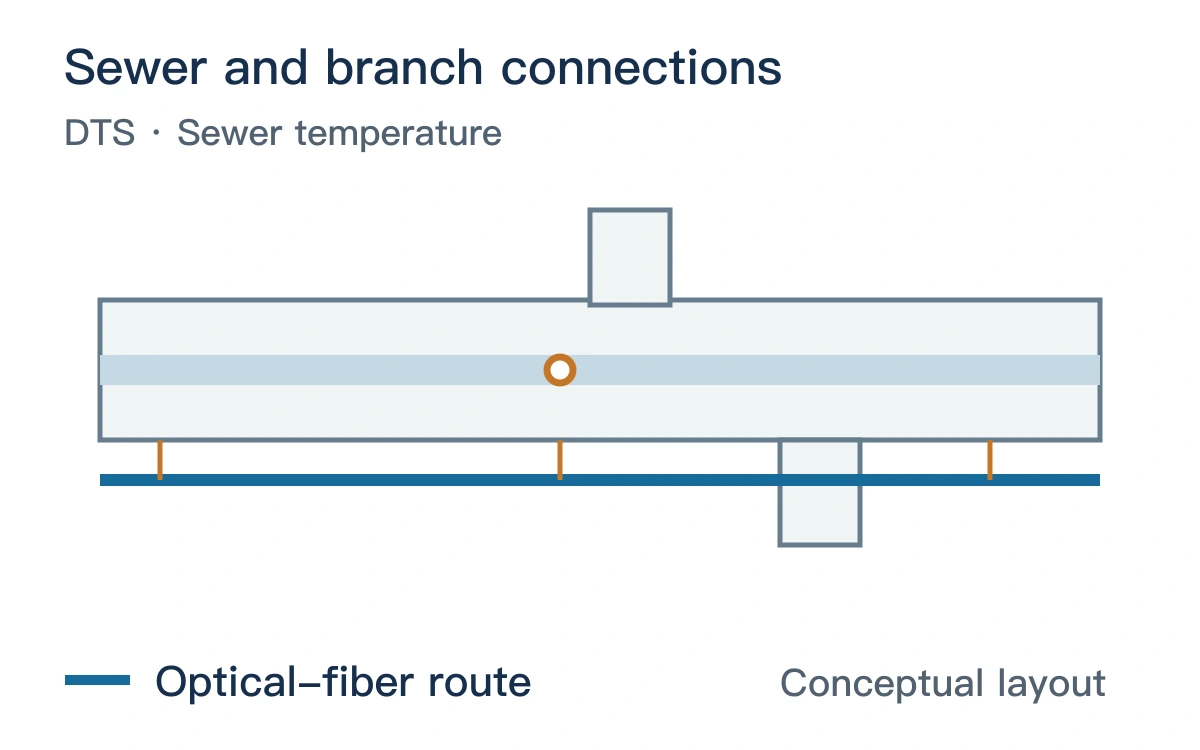
Published research observation
Panasiuk and colleagues monitored sewers with DTS across snowmelt and rainfall, finding different infiltration locations during snowmelt and subsequent heavy rain. [1]
| Item | Description |
|---|---|
| Study setting | Sewer field observations across weather events |
| Research observation | Different weather events reveal different ingress locations |
| Proposed comparison | Map fiber distance to laterals, manholes and flow direction, including dry and spare-cable sections. |
Validation and integration priorities
Cover dry weather, snowmelt and different rain events with water-temperature and precipitation references.
Verify candidate locations through site surveys and flow observations, separating anomaly location from flow estimation.
Reference
[1] Oleksandr Panasiuk et al. Using Distributed Temperature Sensing (DTS) for Locating and Characterising Infiltration and Inflow into Foul Sewers before, during and after Snowmelt Period. Water (2019). DOI: 10.3390/w11081529.