
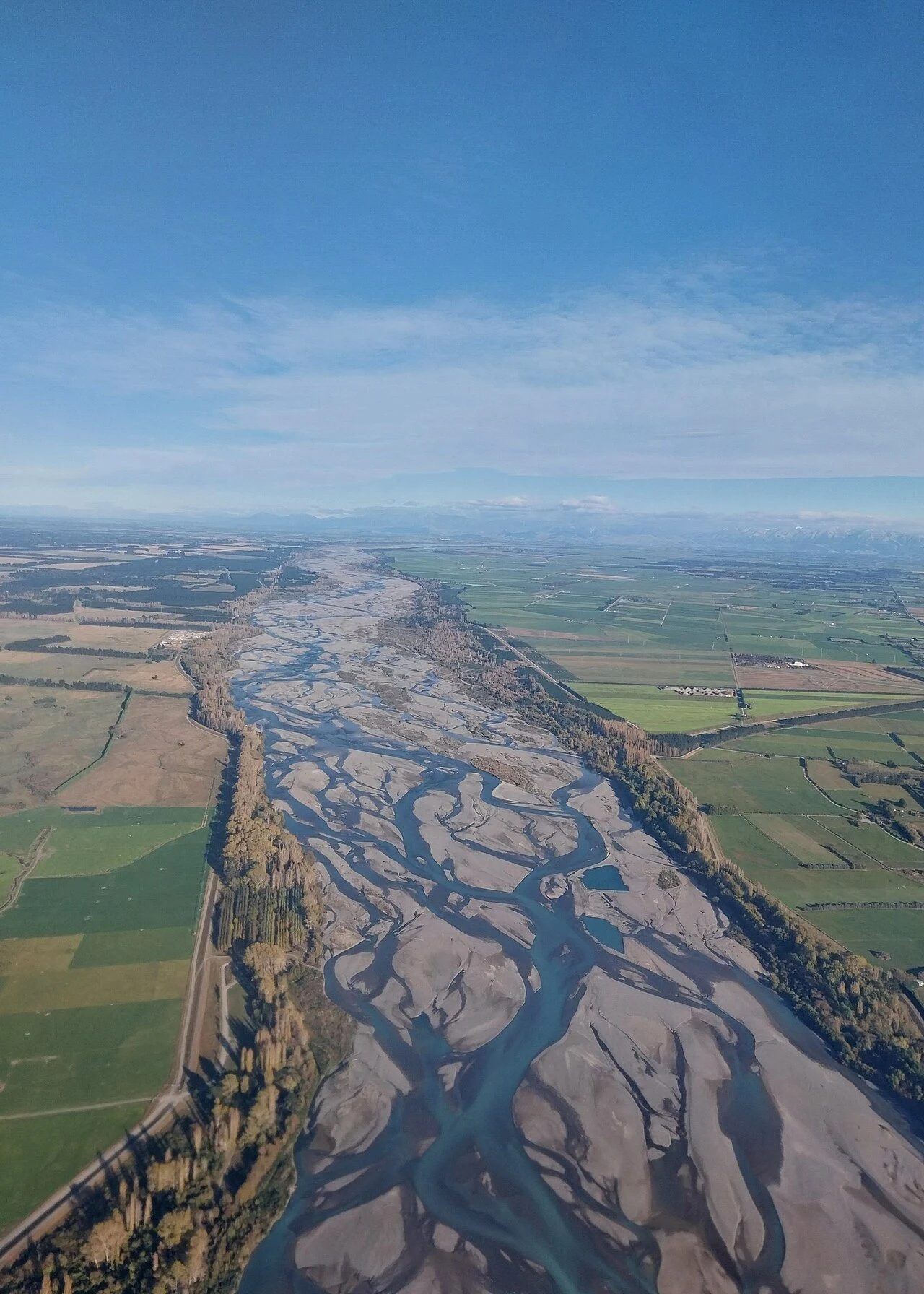
Monitoring task and sensing route
Water movement and medium thermal properties both influence the heating response. Analysis needs identified saturated sections, cable coordinates and justified model parameters.
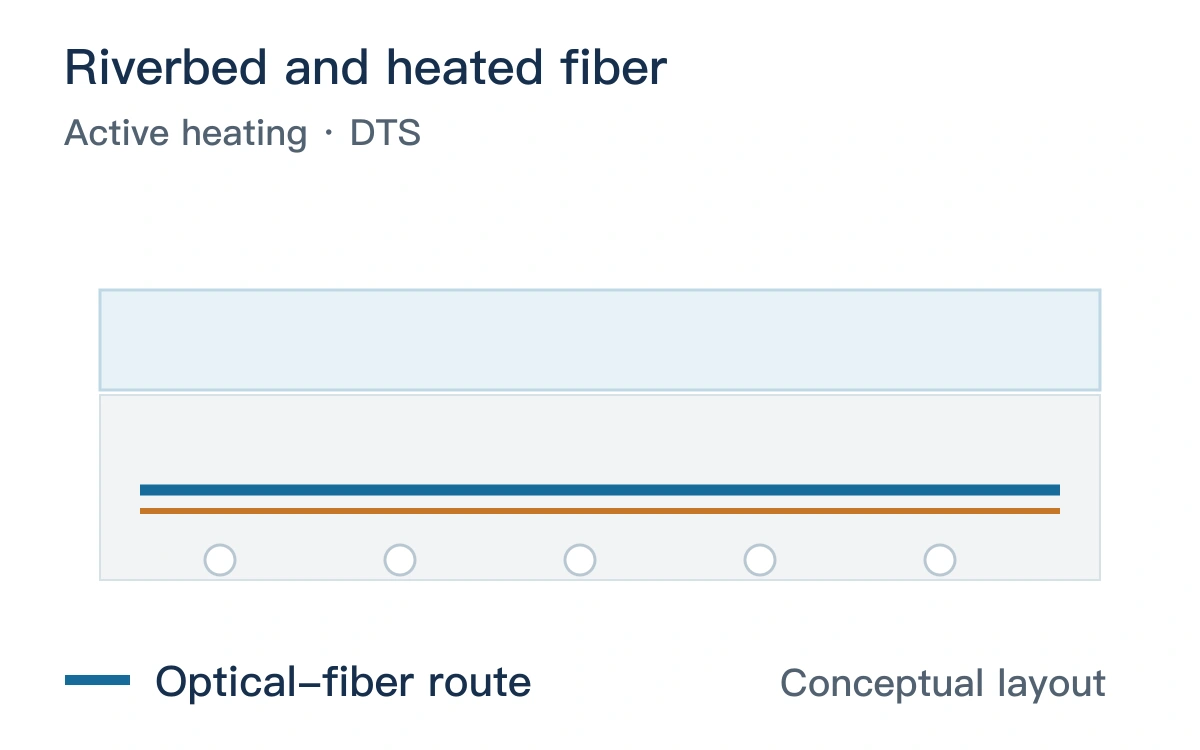
Published research observation
Sai Louie and colleagues repeated active-DTS surveys beneath a braided river, examining groundwater-flux patterns and their association with post-flood geomorphic change. [1]
| Item | Description |
|---|---|
| Study setting | Repeated field surveys beneath a braided river |
| Research observation | Thermal analysis estimates flux magnitude and variation |
| Proposed comparison | Retain burial, drilling and riverbed-elevation records in common survey coordinates. |
Validation and integration priorities
Document heating input, thermal parameters and water levels, analyzing saturated sections separately.
Compare dates and flood stages while quantifying uncertainty in thermal properties and cable position.
Reference
[1] A. J. Sai Louie et al. Quantifying Interannual Variations in Groundwater Fluxes Within a Braidplain Aquifer Using Active-Distributed Temperature Sensing. Water Resources Research (2025). DOI: 10.1029/2024wr039328.