
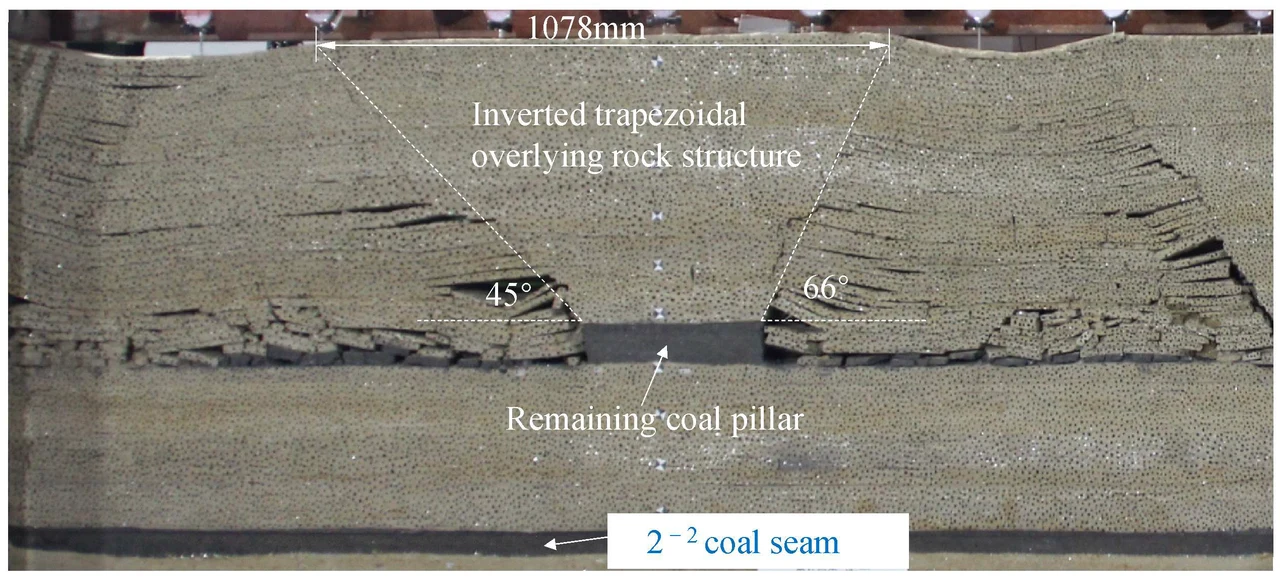
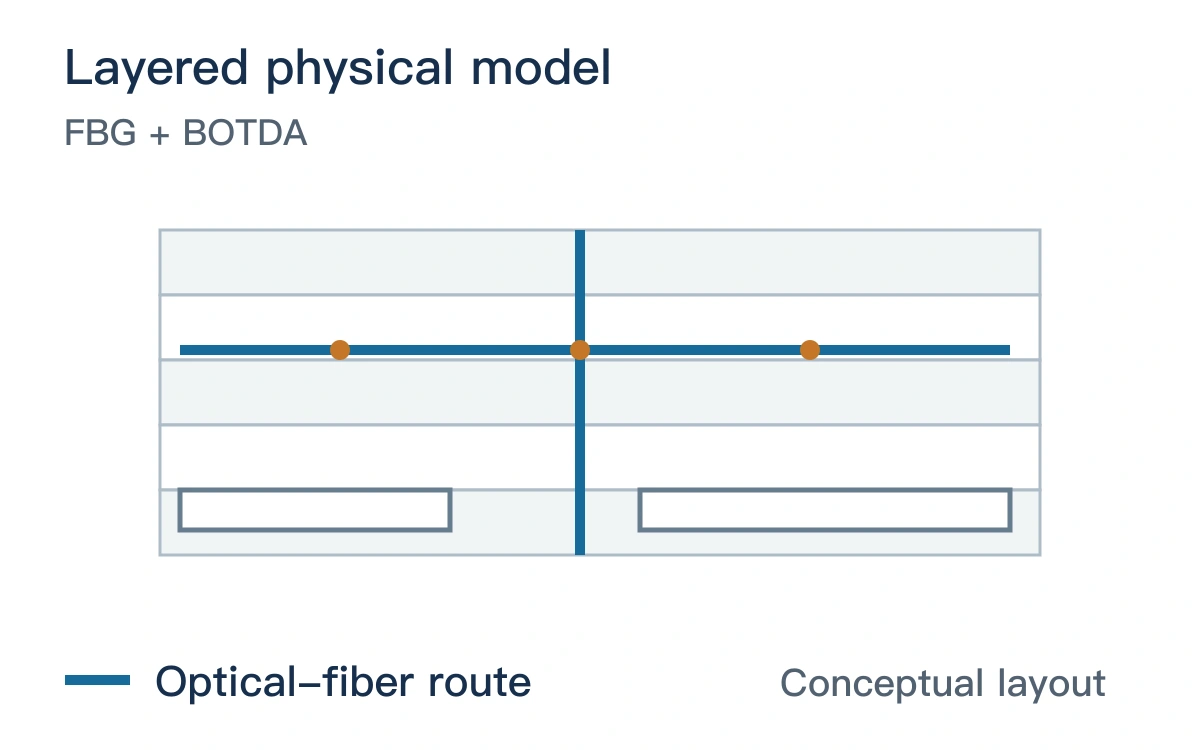
Monitoring task and sensing route
FBGs provide strain at specified locations, while BOTDA provides a profile along the fiber. Interpretation should include similarity materials, sensing orientation and independent pressure measurements.
Published research observation
Zhang and colleagues combined FBG and BOTDA in a coal-pillar physical model, comparing strain evolution with coal-seam floor-pressure records. [1]
| Item | Description |
|---|---|
| Study setting | Mining-overburden physical model |
| Research observation | Model strain compared with pressure evolution |
| Proposed comparison | Document similarity ratios, layer materials, fiber direction and installation. |
Validation and integration priorities
Synchronize simulated extraction steps, pressure readings and visible fracture records.
Compare results within model conditions; define a separate field-validation and acceptance plan for engineering use.
Reference
[1] Zhang D et al. FBG and BOTDA Based Monitoring of Mine Pressure Under Remaining Coal Pillars Using Physical Modeling. Sensors (Basel, Switzerland) (2024). DOI: 10.3390/s24217037.