
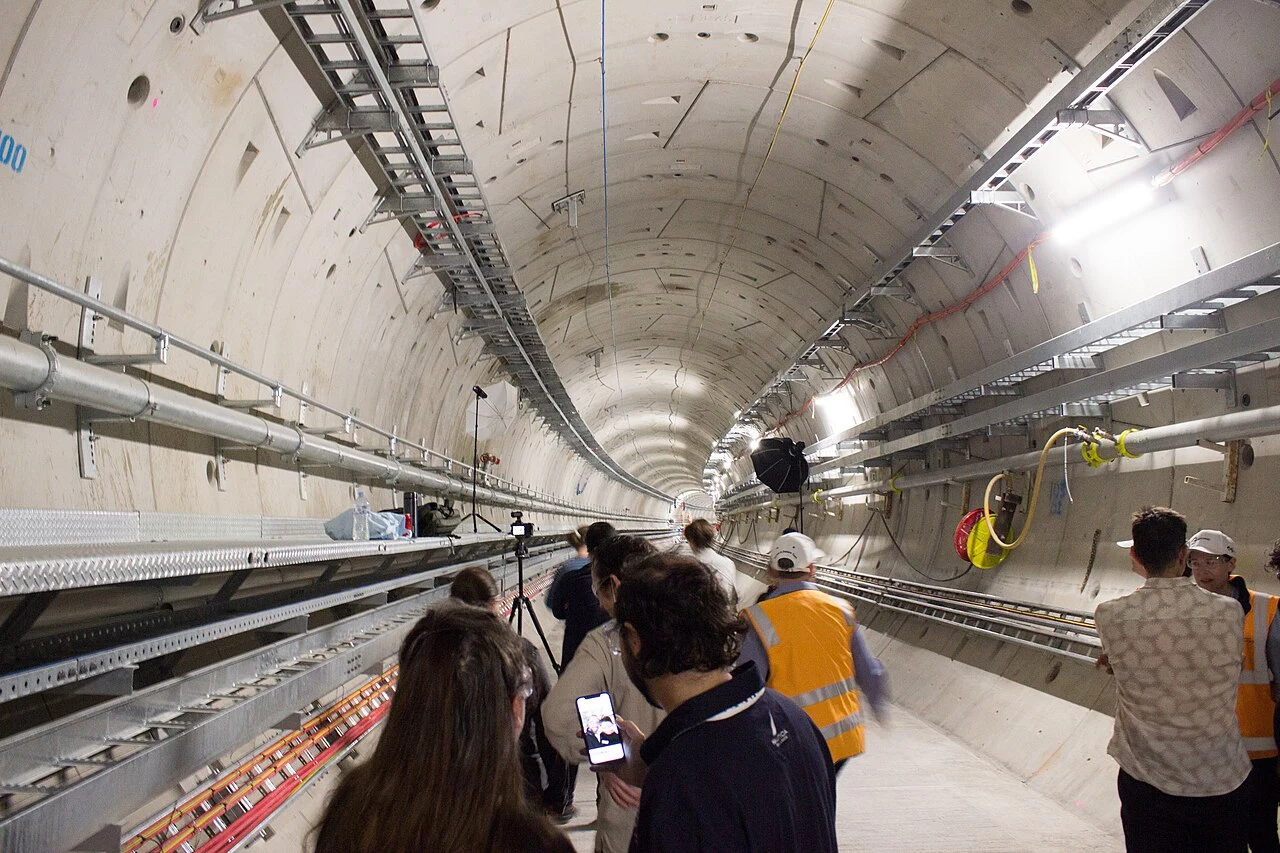
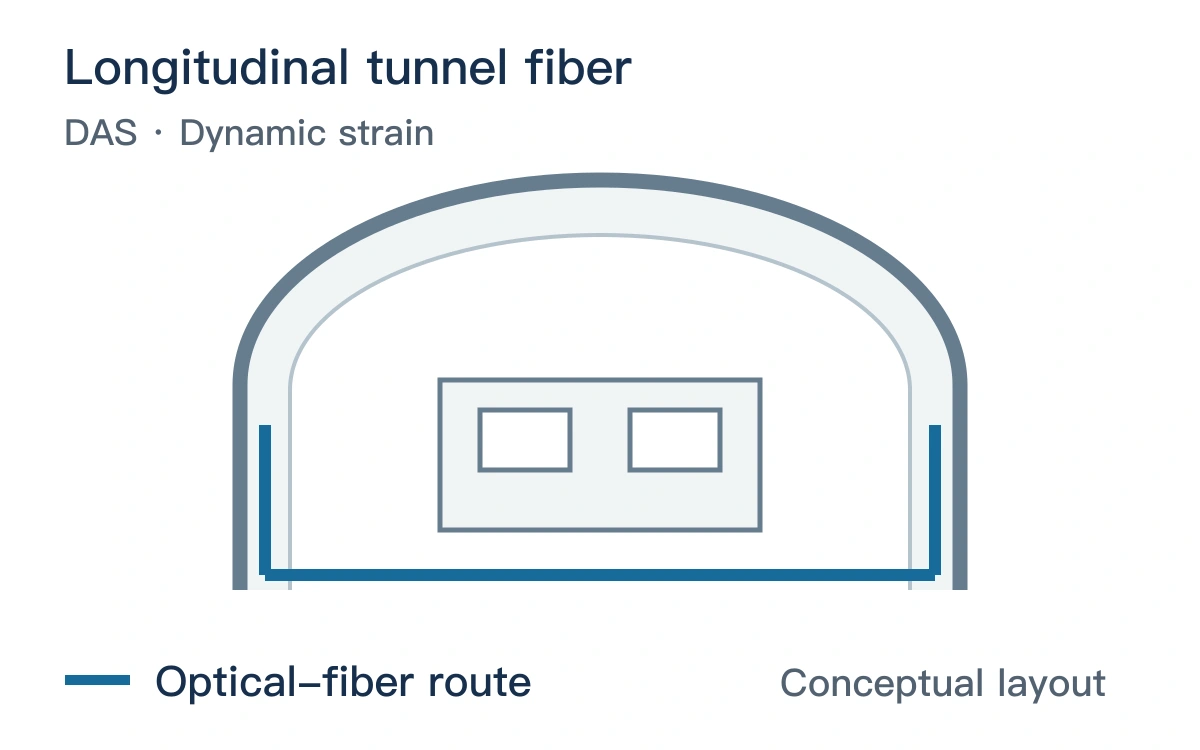
Monitoring task and sensing route
Dynamic-strain features from adjacent locations can be analyzed together. Interpretation should also include train timetables, construction records and cable coupling.
Published research observation
Han and colleagues combined numerical models and tunnel experiments, updating features through spatial correlation between dense measurement locations before classification. [1]
| Item | Description |
|---|---|
| Study setting | Simulation and actual-tunnel experiments |
| Research observation | Neighboring observations inform vibration classification |
| Proposed comparison | Map fiber distance to tunnel chainage, structural sections and construction locations. |
Validation and integration priorities
Collect separate train, background and documented excitation records with source time and position.
Evaluate independent events and prevent leakage between neighboring channels or windows from the same event.
Reference
[1] Han H et al. Abnormal Vibration Identification of Metro Tunnels on the Basis of the Spatial Correlation of Dynamic Strain from Dense Measurement Points of Distributed Sensing Optical Fibers. Sensors (Basel, Switzerland) (2025). DOI: 10.3390/s25206266.