
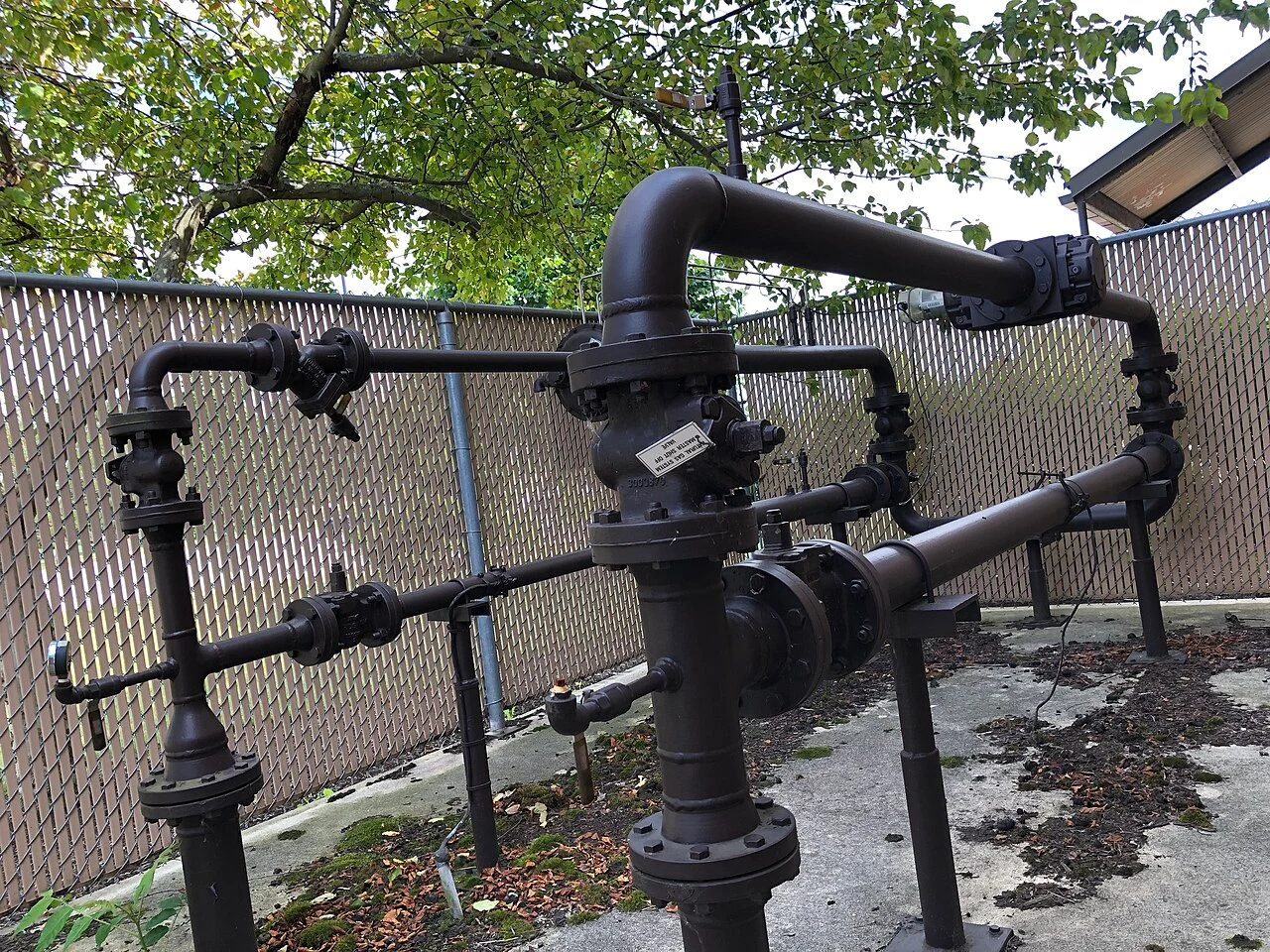
Monitoring task and sensing route
Pipe walls, attachments and surrounding soil modify the vibration reaching the fiber. Time-domain intensity and spectra should therefore be interpreted with documented mechanical contact.
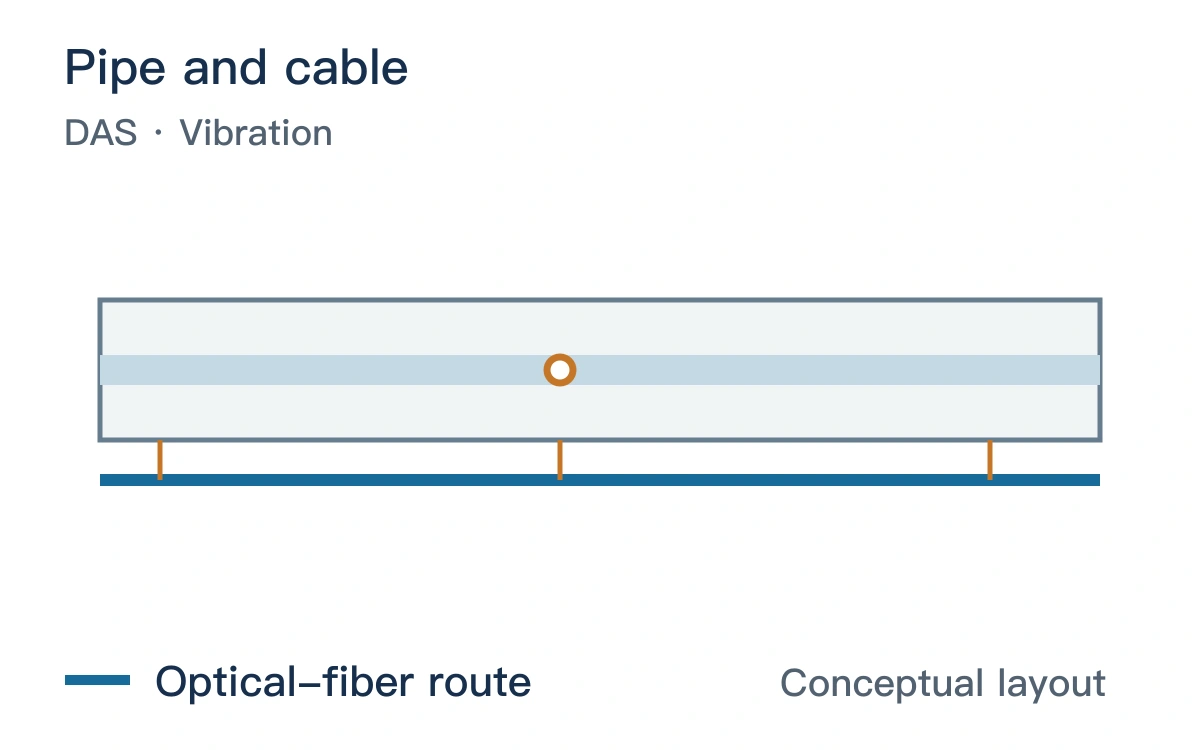
Published research observation
Benabid and colleagues compared supported and sand-covered pipe tests. Cable arrangement and coupling altered the leakage response, with reduced sensitivity after burial. [1]
| Item | Description |
|---|---|
| Study setting | Controlled gas-pipeline experiments |
| Research observation | Installation and burial affect leak response |
| Proposed comparison | Document internal or external cable placement, attachments and maintenance access. |
Validation and integration priorities
Separate pressure, flow, leak position and burial conditions, retaining matched no-leak records.
Evaluate detection and false alarms against independent flow and leak logs under comparable conditions.
Reference
[1] Benabid MK et al. Leakage Detection Using Distributed Acoustic Sensing in Gas Pipelines. Sensors (Basel, Switzerland) (2025). DOI: 10.3390/s25164937.