
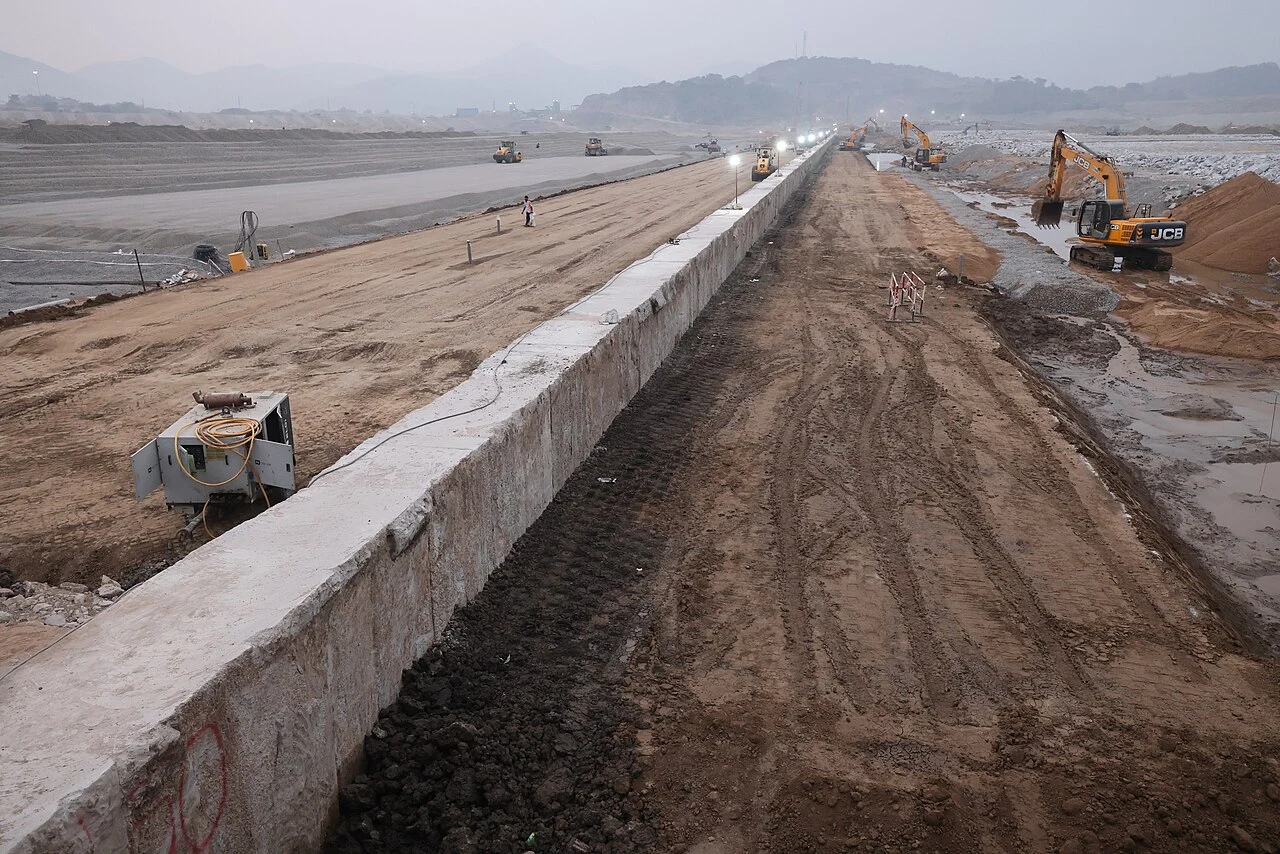
Monitoring task and sensing route
Heating power, soil thermal properties and initial temperature all affect the response. Comparisons need matched wall sections and a no-flow reference.
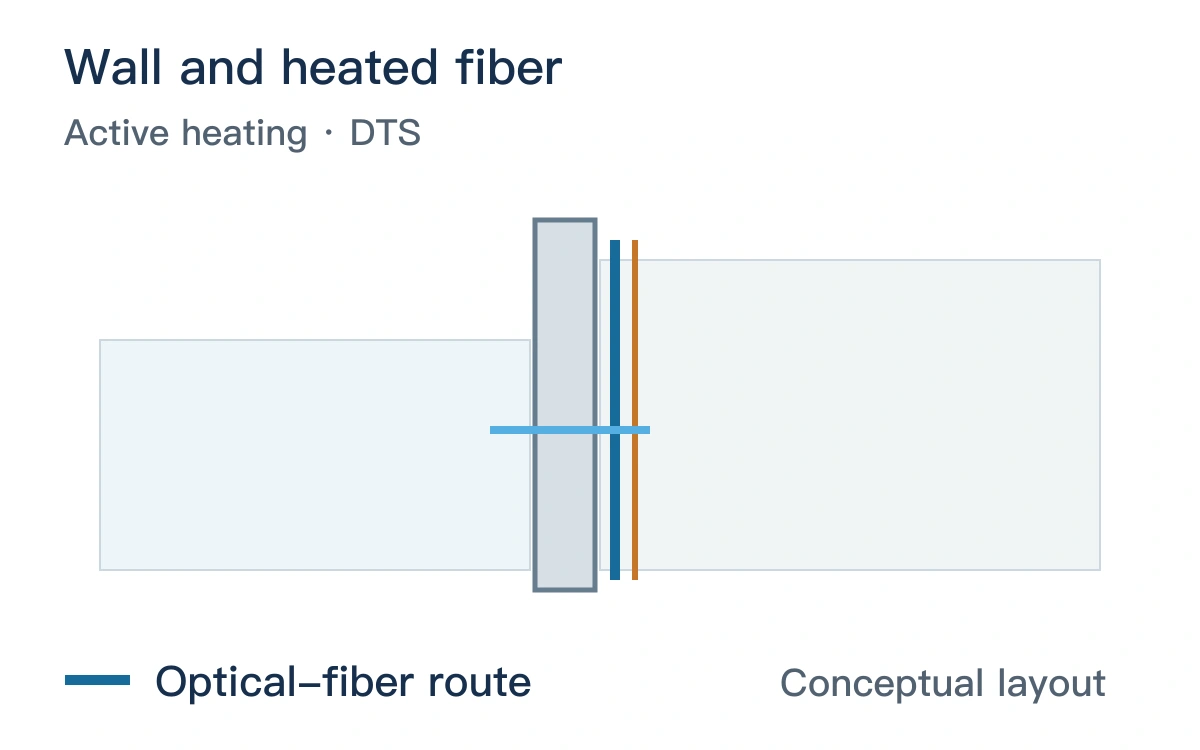
Published research observation
Liu and colleagues used externally heated fiber in a diaphragm-wall model to distinguish seepage-affected regions through differences in temperature rise. [1]
| Item | Description |
|---|---|
| Study setting | Diaphragm-wall seepage model |
| Research observation | Heating response reflects local seepage effects |
| Proposed comparison | Map the fiber and heating circuit to wall sections; record the input and initial temperature. |
Validation and integration priorities
Compare known-flow and no-flow states at equivalent heating stages.
Relate thermal anomalies to independent seepage measurements and measured soil properties.
Reference
[1] Liu T et al. Experimental Study of Leakage Monitoring of Diaphragm Walls Based on Distributed Optical Fiber Temperature Measurement Technology. Sensors (Basel, Switzerland) (2019). DOI: 10.3390/s19102269.