
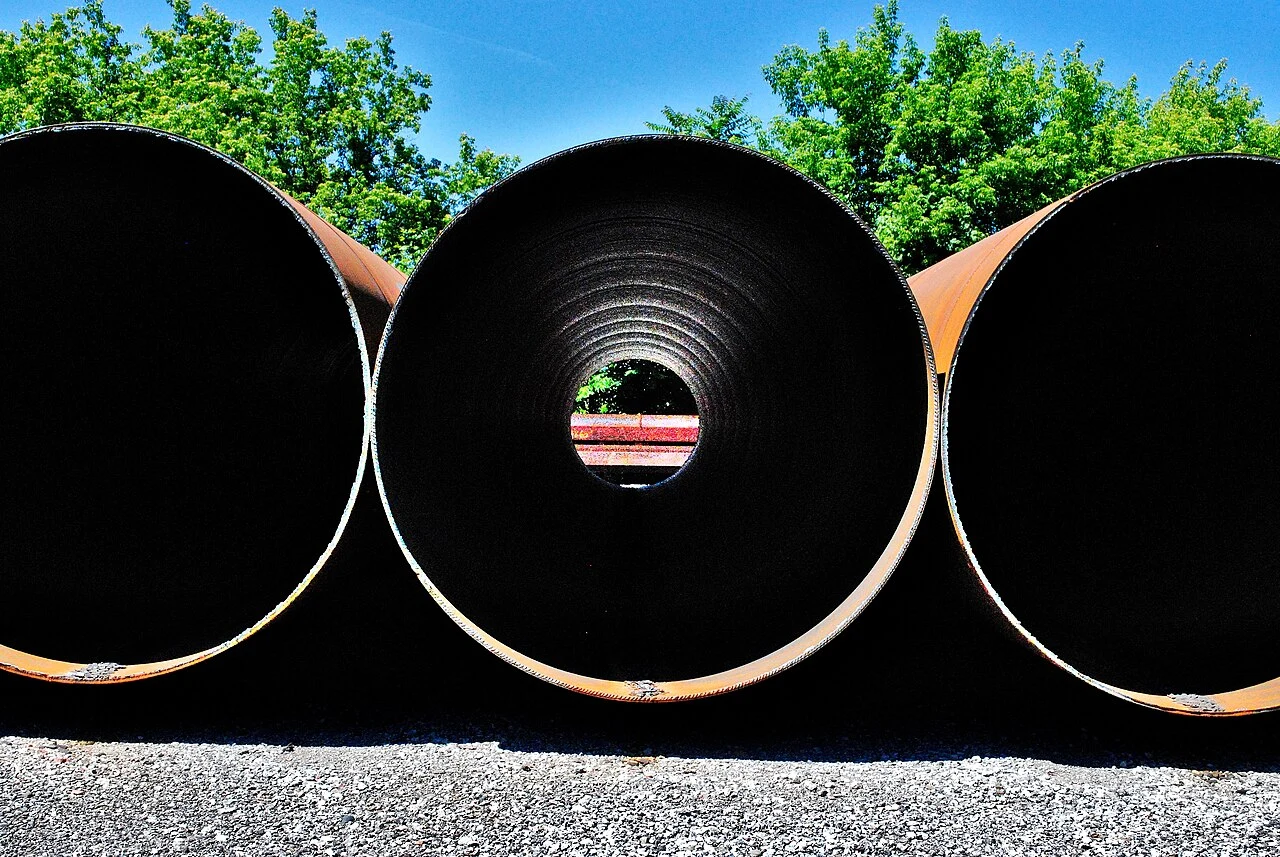
Monitoring task and sensing route
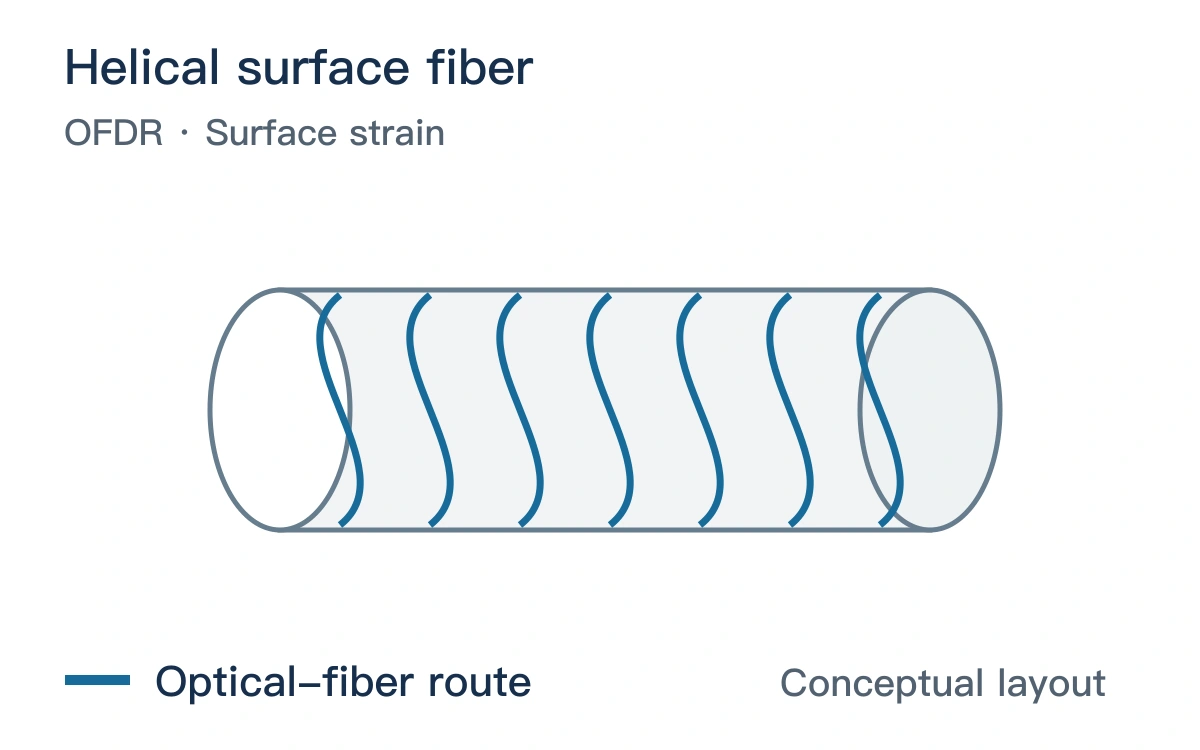
Reconstruction requires the fiber path, winding pitch and structural geometry, with treatment of strain-temperature cross-sensitivity. Results should retain the specimen and loading configuration.
Published research observation
Yang and colleagues used OFDR and helically routed fiber on a small cylindrical-shell specimen to reconstruct bending, torsion and thermal response fields. [1]
| Item | Description |
|---|---|
| Study setting | Small cylindrical-shell laboratory specimen |
| Research observation | Fiber records mapped onto a curved surface |
| Proposed comparison | Survey the fiber path and geometry; inspect bonding and turns. |
Validation and integration priorities
Apply separate known bending, torsion and temperature cases with independent load references.
Compare reconstruction errors on a common coordinate grid, retaining boundary conditions and interpolation methods.
Reference
[1] Yang T et al. Preliminary Test for 3D Surface Strain Measurement in the Tower and Foundation of Offshore Wind Turbines Using DOFS. Sensors (Basel, Switzerland) (2023). DOI: 10.3390/s23156734.