
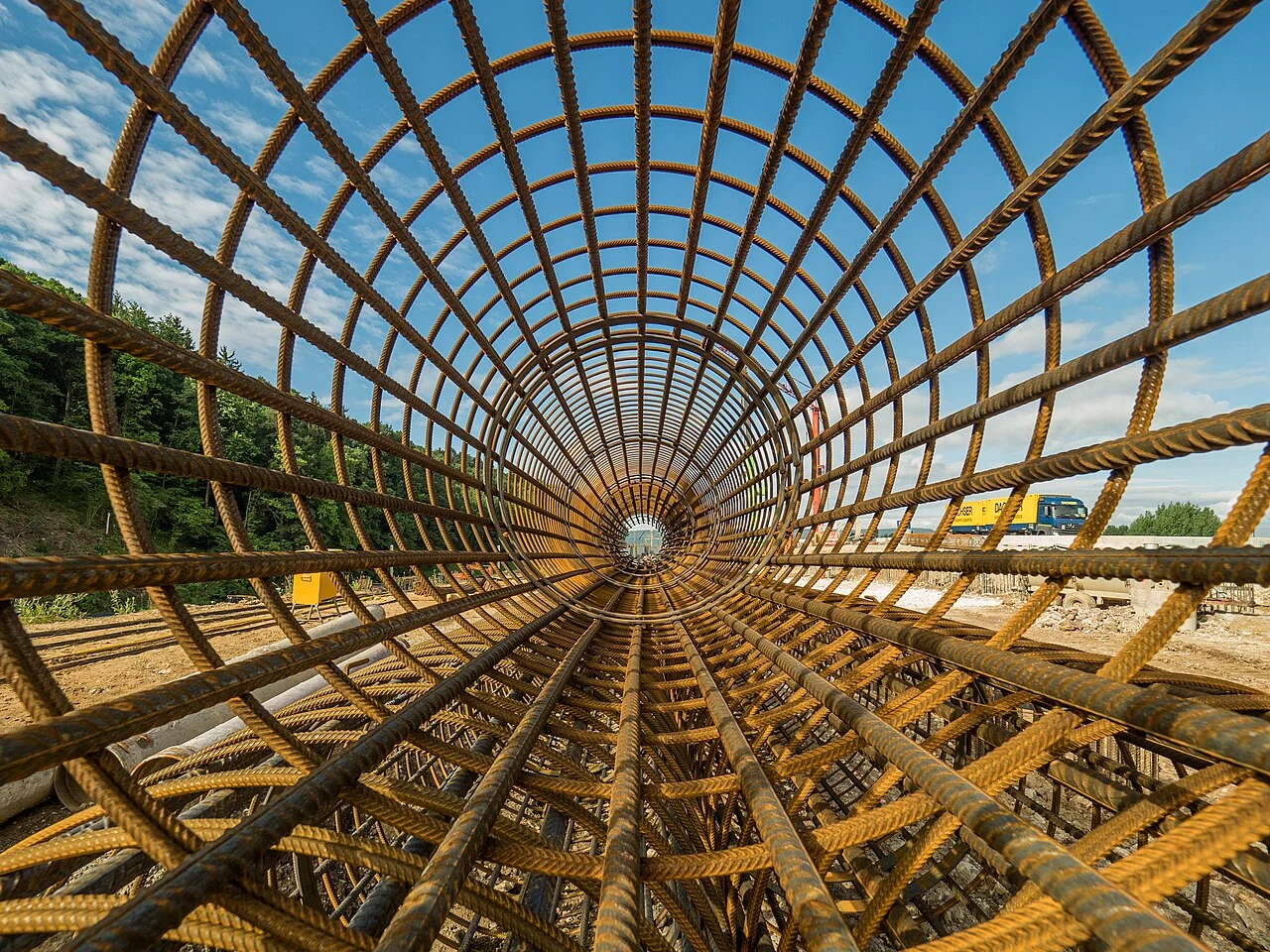
Monitoring task and sensing route
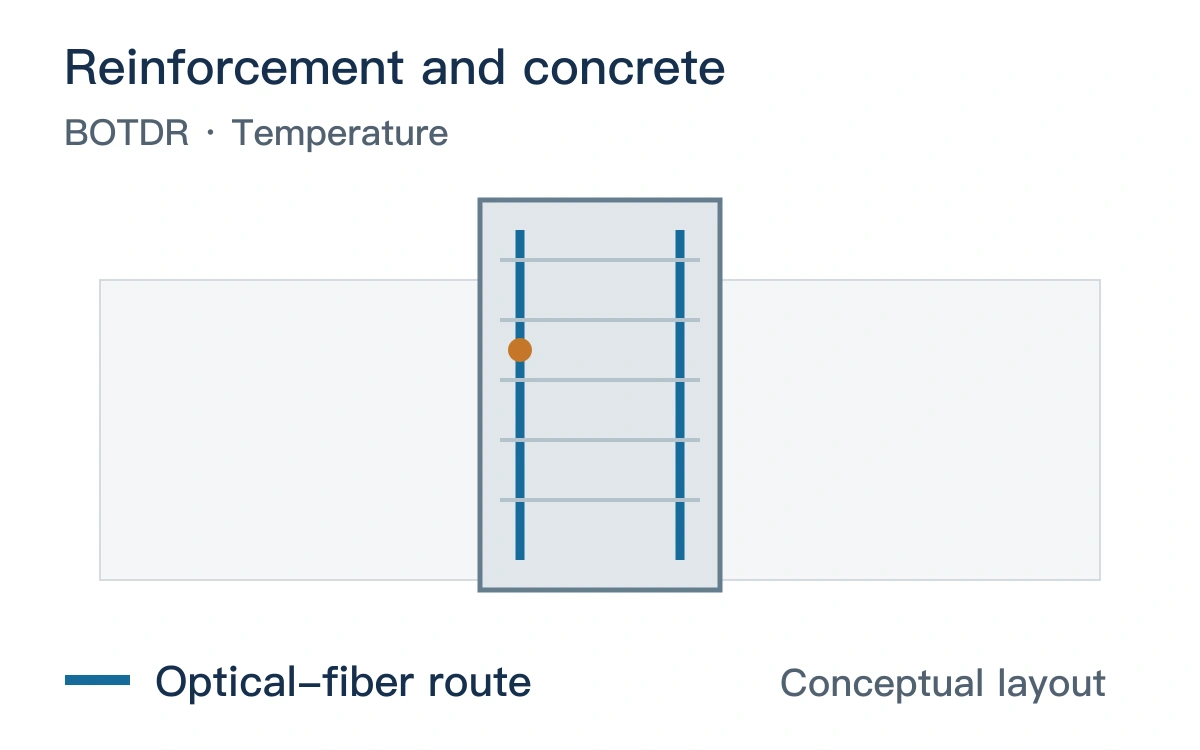
Temperature profiles and a heat-transfer model can be used to investigate concrete-cover variations. Mix design, casting history and ground thermal properties are important inputs.
Published research observation
Rui and colleagues measured curing temperatures in a field test pile and used thermal back-analysis to estimate geometry, comparing it with independent thermal-integrity testing. [1]
| Item | Description |
|---|---|
| Study setting | Field pile and heat-transfer modeling |
| Research observation | Curing temperatures support cover-geometry analysis |
| Proposed comparison | Record cage orientation, fiber depth, casting time and cable protection. |
Validation and integration priorities
Retain material and ground thermal properties with independent temperature and integrity references.
Test parameter sensitivity at anomalous sections and review findings alongside construction and inspection records.
Reference
[1] Rui Y et al. Integrity Testing of Pile Cover Using Distributed Fibre Optic Sensing. Sensors (Basel, Switzerland) (2017). DOI: 10.3390/s17122949.